
Inside Out
What your gut and brain have to do with your skin health

A skin breakout before a big event or flare ups during stressful weeks…most of us have experienced it. So what gives? Maybe you relate the surprise breakout to something you ate, or maybe you haven’t been drinking enough water. Or perhaps you think it’s because of the new skin care product you recently purchased.
While these things can cause breakouts, it’s usually deeper than that. Internal issues eventually show up as external issues.
Skin health is commonly treated as just a surface level issue. Cleanse, exfoliate, moisturize, apply SPF. The skin is more than just a barrier; it’s constantly responding to what’s happening inside your body.
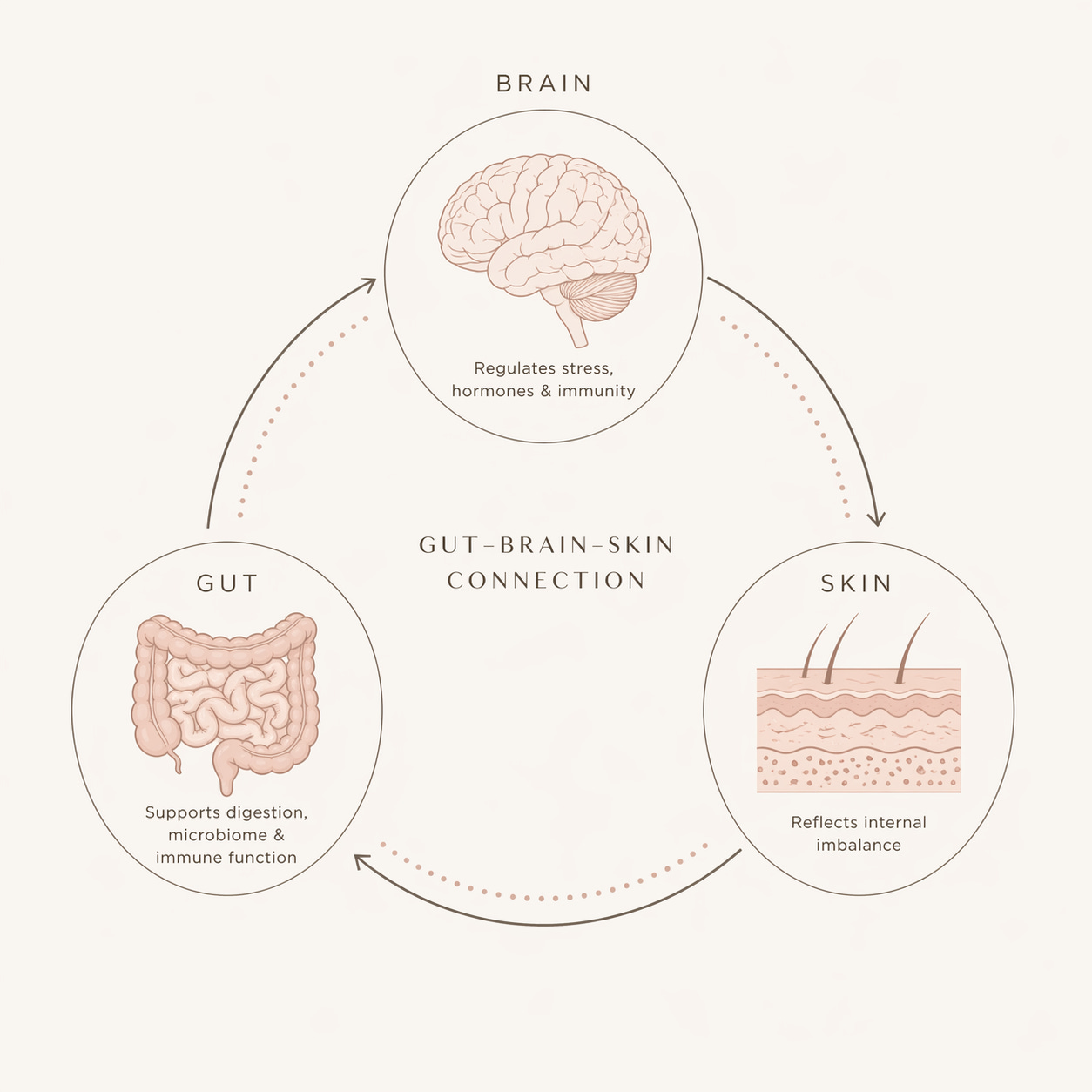
This is where the term gut-brain-skin axis comes in. These three systems are in constant communication with each other; they do not function in isolation.
Gut: digestion, microbes, immune system
Brain: stress and the nervous system
Skin: internal imbalance
Our skin covers approximately 20 square feet of our entire body and accounts for 10-15% of your body weight according to The Skin Cancer Foundation. Skin is also the body’s first line of defense against chemicals and pathogens.
There are three layers of the skin: the epidermis, which serves as the outer barrier; the dermis, which is thick and provides structural support; and the hypodermis, which is responsible for insulation and cushioning.
Let’s break this down:
The Gut
Many people may not like hearing this, but treating skin issues without addressing gut health often overlooks a key underlying factor. A poor diet high in fat and sugar as well as antibiotic use all affect the gut microbiome in negative ways. Fat and sugar cause inflammation and insulin spikes which, in turn, increases oil production leading to acne. Other triggers include excessive uses of alcohol, caffeine, and processed foods.
Antibiotics are used to wipe out infection-causing bacteria but they also wipe out beneficial gut microbes. In doing so, the good flora in the gut is disrupted.
Flora: the diverse community of microorganisms that reside on or in a healthy human body
Why do we need these gut microbes?
Gut microbes wear multiple hats. A few of these include regulating your immune system, fighting off harmful disease-causing organisms, and assisting with the digestion of dietary fiber.
Can these gut microbes be restored if destroyed?
Yes! The simplest way is by diet and lifestyle changes. Consuming a diet high in fruits, vegetables, nuts, whole grains, etc. will provide prebiotics that feed these beneficial gut bacteria to restore the microbiome. Pairing this diet with regular exercise, quality sleep, and stress regulation will also help.
Side quest: our microbiome and normal flora aren’t just in the gut. They are also on your skin, in your mouth, in the upper respiratory tract, in the urethra, and in the vagina. Each of these unique microbiomes work to prevent colonizing of bacteria and fungi.
The Brain
The brain and skin are in constant communication through hormones and the immune system. Cortisol is a steroid hormone produced by the adrenal glands and is the body’s primary stress regulator. When we are stressed and our brain is in “fight or flight” mode, our body produces cortisol to increase energy to stay on high alert. High levels of cortisol contribute to weight gain, hormone imbalances and high blood sugar. It also increases oil production, inflammation, and breaks down collagen leading to flare ups with psoriasis, eczema, and acne.
Regular exercise, healthy sleep patterns, and a healthy diet all contribute to reduced stress which in turn can improve skin health.
The Skin
The skin is where internal imbalances becomes visible. Breakouts and flare ups are often treated at the surface level, and not a deeper level (like the gut or brain).
Acne, psoriasis, and eczema are imbalances influenced by inflammation, hormones, and our immune system. All of which relate to the brain and gut microbiome.
Acne: inflammation and oil production caused by stress, poor diet and sleep health. Genetics also play a role in susceptibility.
Psoriasis: An autoimmune skin condition that causes skin cells to multiply at an accelerated rate. Stress, alcohol consumption, smoking, and a poor diet can lead to flare ups.
Eczema: A weakened skin barrier causing dry, flaky, itchy skin. Stress and anxiety lead to flare ups.
These three skin conditions are all signals of what is going on internally. The gut microbiome plays a role in regulating inflammation and the immune system while the brain influences stress responses. There is a continuous feedback loop that impacts the skin directly.
What it all comes down to
One thing to note here is that we all have different microbiomes. We are all uniquely our own system and what works for one person (diet-wise) may not work for someone else. For example, dairy intake doesn’t affect everyone’s gut microbiome and skin health, but for some, it may be the reason for an upset stomach and acne flare ups. Environmental factors, genetics, and even being born via vaginal birth or cesarean section all play a role in our unique gut microbiome.
The reality of skin health is far more complex than what we see on the surface. The gut, brain, and skin do not function in isolation. There is constant communication. While skincare products can help manage symptoms, they don’t address the root cause
I am an absolute lover of all things skin care. I get Botox, regular hydrafacials, microneedling, and I use medical-grade skin care. While these things do help my skin health dramatically, if I am stressed, dehydrated, or have too much sugar, my skin isn’t happy and results in breakouts and redness in my cheeks.
By supporting gut health, managing stress, and maintaining a balanced lifestyle, you can improve or maintain how your body functions and influence how your skin looks and feels. True skin health isn’t just about what you apply to the surface, it’s how you support your body as a whole.
To healthier skin from the inside out,